


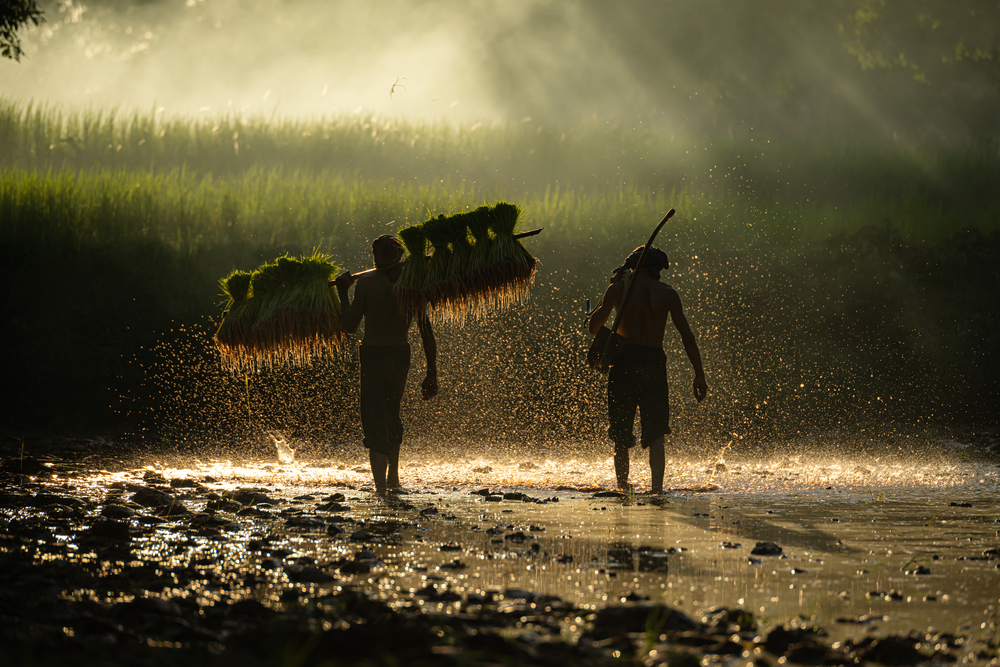
 (Photo source: Envato)
This story is recorded in the Sutra of Miscellaneous Jewels (Samyukta Ratnapitaka Sutra) – There were once two brothers. The elder brother found farming too difficult and believed it would be better to rely on the blessings of the heavenly deity rather than work hard in the fields. So, he left the farming to his younger brother. Instead, he prepared generous offerings and went to the temple every day to worship the deity and pray for blessings.
Using his divine powers, the heavenly deity observed the elder brother and discovered that in his past life, he had hardly donated anything or shared what he had with others. In this life, he had also done nothing to benefit others. All he did was pray for blessings.
The deity thought, “If he has not planted any seeds of kindness, how can I give him the fruits of blessings?”
However, seeing the elder brother’s sincere devotion, the heavenly deity took pity on him. He was concerned that if the man’s prayers went unanswered, he might become angry, resentful, or even speak ill of the deity. Therefore, the deity decided to appear in human form and take the appearance of the man’s younger brother. He went to the temple and used this opportunity to awaken the man to the truth.
When the elder brother saw him, he asked, “Why aren’t you working in the fields? What are you doing here?”
The younger brother replied, “I also want to ask the deity for blessings. If the deity blesses us, we will no longer have to work in the fields. The land can simply grow rice, grains, and other crops by itself.”
The elder brother immediately scolded him and said, “How can that possibly happen? If you do not sow the seeds or tend the fields, how can you expect to reap a harvest?”
“You are right!” the younger brother replied.
At that moment, the heavenly deity revealed his true form and said, “There is no such thing as harvesting without planting. How can anyone receive a result without first creating the cause?
“You did not cultivate blessings in your past life, and in this life, you have neither cultivated goodness nor helped others. All you do is ask for blessings with greed. How can I give you blessings when you have not created the causes for them?
“It is better that you start doing good deeds, practise generosity, and create blessings for others and society. When the seeds of your wholesome actions ripen and bear fruit, blessings will naturally come to you. There will be no need to ask for them.”
Blessings and misfortunes arise from the causes and conditions we create through our thoughts, words, and actions. To truly “seek our own blessings” means to cultivate wholesome causes and good karmic connections by giving sincerely, helping others, and doing good whenever we can. The people we meet in our daily lives are also the best field for spiritual practice. With right understanding, right view, right thought, and right mindfulness, we can treat others and everything around us with sincerity and kindness. When we cultivate compassion and try to relieve the suffering of others, we plant wholesome seeds and create good causes and conditions. When these causes and conditions mature, blessings will naturally follow.
When we genuinely cultivate a heart of tolerance and generosity, we become less easily disturbed by unpleasant words or situations. When we hear something we do not like or face something that does not go according to our wishes, we should not immediately give rise to anger or resentment. Doing so only disturbs our own minds and affects the people around us.
We should also remain grateful and regularly reflect on our thoughts and actions. When we make mistakes, we should sincerely repent and try not to repeat them. In this way, we can gradually resolve negative relationships and build more wholesome connections with others.
Guarding our minds and being sincere with ourselves is part of living with truth. Caring for the people around us, being mindful of the consequences of our actions, and considering the needs of others is practising goodness.
When everyone can live and work together in harmony, practise kindness, and do good with a sincere heart, we not only enrich our own lives but also bring greater peace and goodness to the people around us. In this way, each of us can contribute to making the world a better place.
Translated by Michelle Lee
Share 


